
Alum Babak Taheri Invests in Future of Aggie Engineers with New Teaching Lab
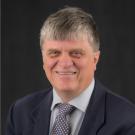
Babak Taheri, an alum who combined electrical engineering, computer science, neuroscience and biomedical engineering in his graduate program at the University of California, Davis, in the early ’90s, has left an imprint on the modern world.
Taheri led the team that developed one of the first miniature three-axis gyroscopes in 2008, enabling motion sensing in smartphones, digital cameras and even gaming systems like the Nintendo Wii. His work has advanced sleep-monitoring sensors, semiconductor technologies that power modern computing and artificial intelligence, and applications of next-generation Internet of Things technologies.
He has held senior leadership roles across the electronics industry and most recently served as CEO of Silvaco, a Silicon Valley–based electronic design automation company that he took public in 2024.
Taheri credits his decision to attend UC Davis as one of the most important turning points in his life. He says the College of Engineering — and its faculty — left a lasting impression that continues to shape his career.
Now, he wants to give back to the department that left a mark on him. To honor his longtime mentor and collaborator, Distinguished Professor André Knoesen, Taheri is funding the renovation of a teaching lab that will bear Knoesen’s name.
The André Knoesen ECE Teaching Lab represents a full-circle moment, not only for Taheri, but for the Department of Electrical and Computer Engineering’s commitment to hands-on learning.
“André is one of the most creative people I know,” Taheri said. “He is someone who has created a new way of thinking about education and is open to thinking outside the box.”


From CNM2 to a New Generation of Learning
Taheri first met Knoesen when he transferred to UC Davis from Stanford in 1990 as a biomedical engineering graduate student. He was drawn to the university because the College of Engineering had just opened the Center for Nano-MicroManufacturing, or CNM2, then one of the few facilities in the U.S. that offered students hands-on fabrication opportunities.
In fact, Taheri was one of the first five students to use the space, working at the forefront of what was possible for a graduate student working at the intersection of multiple disciplines
“He was very independent, very advanced and charted new ground,” Knoesen said, referencing Taheri’s contributions to the culture of CNM2 and the then-nascent biomedical engineering program at UC Davis.
When Taheri was a student, CNM2 was an emblem of how education was changing before the turn of the 21st century. Now, with the Andre Knoesen ECE Teaching Lab, Taheri aims to provide UC Davis engineering students with a facility that mirrors his educational experience: a multipurpose space that looks to the future while best supporting the needs of today.
The lab doubles as an educational innovation hub, featuring interactive displays that transform lectures into collaborative working sessions and top-of-the-line audio-visual systems that seamlessly integrate remote participants into the classroom. Combined with industry-standard Keysight instrumentation and cutting-edge prototype hardware, the facility provides students with the tools and teaching approaches that define modern engineering practice.
“It’s essential to show the chain between theory and practice,” Taheri said. “Labs like this help students and faculty prototype what is possible.”

What Makes a Lab of Tomorrow
The André Knoesen ECE Teaching Lab is designed as a collaborative, technology-rich learning environment. By integrating hands-on experimentation with modern teaching methods, the lab will help students visualize complex concepts, develop practical skills and prepare for internships and careers in industry. Its features include:
- A touchscreen monitor, with whiteboard functionality
- Audio and visual equipment for hybrid and distance learning
- 11 bench stations designed to encourage group work
- Keysight oscilloscopes, waveform generators and electronic prototyping equipment
- A monitor outside the lab for important learning materials and announcements
- And more to come
A Partnership Rooted in Innovation
Taheri and Knoesen’s collaboration spans more than three decades. In the early 2000s, they worked together on an unconventional project that merged electrical engineering with winemaking, developing wireless sensor systems to monitor fermentation and microbiological processes. That work helped launch a research initiative to modernize wine production through advanced sensing technologies.
Their partnership has also shaped the strategic direction of the Department of Electrical and Computer Engineering. In 2015, Knoesen asked Taheri to chair the department’s advisory board, a role he continues to hold. Taheri has been closely involved in departmental planning over the past decade, working with Knoesen during his tenure as department chair from 2020 to 2025.
“Babak has made a big impact on the department and continues to do so,” Knoesen said.
The partnership between Taheri and Knoesen and the successes they’ve achieved together speak to the kind of lifelong collaboration and curiosity they hope to spark in students who walk through the doors of the André Knoesen Teaching Lab.
“I want today’s Aggie engineers to have the same chance to explore, build and create as I did,” Taheri said.