In Memoriam: William A. Gardner, Father of Cyclostationary Signal Processing
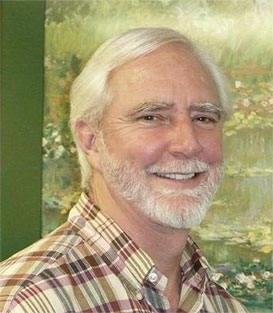
William A. Gardner, known to colleagues, students, and friends as Bill, has passed away. With his death, the field of statistical signal processing has lost the engineer most responsible for its modern understanding of cyclostationarity, and a generation of researchers has lost a foundational teacher whose work will shape the discipline for decades to come.
It is rare for a single individual to guide a field of study from its infancy through every stage of its maturation over the course of half a century. This is precisely what Bill Gardner did. He is widely regarded as the father of cyclostationary signal processing, and for much of his career he was considered its preeminent authority worldwide.
An Unlikely Path to Engineering
Bill's route to the profession was anything but conventional. After completing high school in 1960, he served in the United States Air Force, where he trained as an aircraft radio repairman at Keesler Air Force Base. He went on to Foothill College in Los Altos Hills, California, and then to Stanford University, earning a Bachelor of Science degree in Electrical Engineering in 1966 and a Master of Science degree the following year. Following graduate coursework at the Massachusetts Institute of Technology and time at Bell Telephone Laboratories, he received his Doctor of Philosophy in Electrical Engineering from the University of Massachusetts, Amherst, in 1972.
He accomplished all of this while quietly contending with dyslexia and Tourette syndrome, conditions he would not fully understand until well into adulthood. He often reflected that the very traits that made his early education difficult became, in time, the engine of his creativity: a slow and exacting way of reading that forced complete comprehension, a relentless curiosity for the question of why rather than how, and a capacity for sustained, deep concentration. He credited his wife of more than fifty-six years, Nancy, as the constant support that made a long and often uphill career possible.
A Career of Building Foundations
In 1972, Bill joined the faculty of the Department of Electrical and Computer Engineering at the University of California, Davis, where he would spend the defining decades of his career. Rising through the ranks to full professor, he built a research program devoted to the theory and methodology of cyclostationary signal processing and to the supervision of master's and doctoral students. He transitioned to Professor Emeritus in 2001.
In 1986, he founded Statistical Signal Processing, Inc. (SSPI), a theoretical research and algorithm-development firm that employed many of his current and former graduate students and supported their thesis and postdoctoral work. He led SSPI until its twenty-fifth anniversary in 2011, developing signal-processing algorithms for radio reconnaissance, signals intelligence, and cellular communications, and licensing intellectual property to industry. From 2011 to 2013, he served as Research Scientist Senior Principal at Lockheed Martin Space Systems Company's Advanced Technology Center.
The Theory of Cyclostationarity
As a newly minted PhD in 1972, Bill set his sights on a conviction that others were slow to share: that signals whose statistical character varies periodically in time deserved a comprehensive foundational theory of their own, analogous to the one built in earlier decades for stationary signals. Despite years of skeptical reviewers, he persisted, and his work culminated in the now-classic 1987 book Statistical Spectral Analysis: A Nonprobabilistic Theory (Prentice-Hall), which laid out his comprehensive theory of cyclostationarity and the many novel algorithms it made possible.
His deepest and most original contribution was the theory of Fraction-of-Time (FOT) Probability, a rigorous mathematical framework for the analysis of time-series data built entirely on time averages rather than on abstract ensembles of stochastic processes. Along the way, he originated much of the vocabulary the field now takes for granted, including such fundamental notions as the cycle frequency, the cyclic autocorrelation, and the spectral correlation density. The methods he created moved from theory into practice across an extraordinary range of applications: cellular communications, cognitive radio, blind channel equalization, direction finding, signal interception, and, well beyond his original field, the diagnosis of machinery through mechanical-vibration analysis.
Even in later years, he continued to extend the discipline, broadening cyclostationarity from engineering into the sciences, where cyclicity is often irregular, and deepening the mathematical underpinnings of the FOT theory he had originated. In his final decade, he also created an expansive educational website devoted to cyclostationarity, intended to bring young scholars quickly up to speed on a body of advanced knowledge so that they could become productive researchers in their own right. His collaboration with Professor Antonio Napolitano of the University of Naples Parthenope carried the theory into its modern generalizations.
Recognition
Bill authored four books. Foremost among them are the 1987 Statistical Spectral Analysis and the graduate textbook Introduction to Random Processes with Applications to Signals and Systems (Macmillan, 1985; McGraw-Hill, second edition, 1990). He edited a fifth, Cyclostationarity in Communications and Signal Processing (IEEE Press, 1994). He was the inventor named on fifteen patents and the author or co-author of more than one hundred peer-reviewed research papers, work that has been cited on the order of sixteen thousand times.
He received the Best Paper of the Year award from the European Association for Signal Processing in 1986 for “The spectral correlation theory of cyclostationary time-series,” the Distinguished Engineering Alumnus Award from the University of Massachusetts in 1987, and the Stephen O. Rice Prize Paper Award from the IEEE Communications Society in 1988 for “Signal interception: A unifying theoretical framework for feature detection.” In 1991, he was elected a Fellow of the Institute of Electrical and Electronics Engineers, “for contributions to the development of time-series analysis and stochastic processes with applications to statistical signal processing and communication, and for contributions to engineering education.”
Over three decades, he served as principal investigator on more than fifty research awards totaling more than twenty-three million dollars, from sponsors including DARPA, the National Science Foundation, the National Security Agency, the National Reconnaissance Office, the Office of Naval Research, and the Air Force Office of Scientific Research. In 1992, he organized and chaired the first international Workshop on Cyclostationary Signals.
A Lasting Legacy
Beyond the ideas he introduced and the field he helped shape, Bill took deliberate steps to ensure that his commitment to scholarship, education and the next generation of students would endure. He established the William A. Gardner Educational Website Fund at UC Davis, an endowment ensuring that www.cyclostationarity.com, the educational website he created, will be maintained and remain publicly and freely accessible in perpetuity, kept on a secure platform and updated as needed to keep pace with evolving technology standards and with the continuing development of the field it documents. He also created a provision in his estate to establish the William A. Gardner Memorial Fellowship, an annual award for a graduate student in electrical and computer engineering who has demonstrated exceptional academic performance and high potential for future success, as determined by the faculty of the department.
Bill's generosity extended beyond engineering through the Nancy S. Gardner Liberal Arts Student Success Award, established in memory of Nancy Susan Gardner, a scholar of anthropology, comparative literature, and music who served as concert manager for the Department of Music and whose work with the Committee for Arts and Lectures helped found the Mondavi Center for the Performing Arts. The award honors her commitment to the arts at UC Davis with annual support for an undergraduate music student in the College of Letters and Science.
Those who worked alongside Bill described his contributions as courageous, radically new, and profound, and described him, simply, as a pioneer. Yet what his colleagues will remember is not only the theorems that now bear the marks of his thinking, but the scholar behind them: exacting, endlessly curious, generous with the students he mentored, and quietly determined to help others see past the surface of the mathematics to the deeper ideas beneath. He believed that engineering and science are, after all, performed by people, and that an engineer's work can never be fully separated from the person who does it.
He leaves behind a discipline he did more than anyone to create, a body of work that will continue to teach, and the many researchers whose careers he made possible. He will be deeply missed.