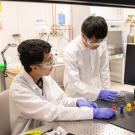
The honor from UC Davis Graduate Studies celebrates the associate professor of electrical and computer engineering work to ensure the academic success, professional development and personal well-being of graduate students.
Anthony Thomas, a new assistant professor of teaching in the Department of Electrical and Computer Engineering at the University of California, Davis, wants to help students understand the fundamental principles, from computer hardware to mathematical theories, that underpin artificial intelligence.
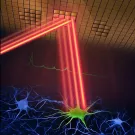
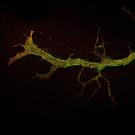
Researchers at UC Davis have developed a new microscope to capture high-speed images of brain cell activity with less harm to brain tissue. The new approach could be used in research with mice to provide a clearer view of how neurons communicate in real time, leading to new insights into brain function and neurological diseases.
Autonomous vehicles can struggle when confronted with unforeseen events, such as a car driving on the wrong side of the road. To address this issue, Professor Junshan Zhang is rethinking how researchers design AVs by letting the machine learning models train themselves.
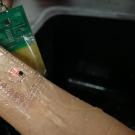
Assistant Professor of Electrical and Computer Engineering Hyoyoung Jeong explores the use of wireless wearable devices for health monitoring. Jeong believes the technology can offer a more practical and economical option for health management compared to current hospital-bound machinery.
A luminary in control systems engineering, Mayne's legacy encompasses distinguished scholarship, pioneering research and dedicated mentorship. He was a professor in the Department of Electrical and Computer Engineering from 1989 to 1996.
Researchers in the Department of Electrical and Computer Engineering are pushing the possibilities of artificial intelligence. They’re exploring the furthest limits of neural network design and are creating next-generation advancements in medicine that are transforming patient care.
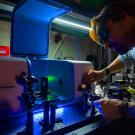
Professor Jeremy Munday is part of a College of Engineering project to make around-the-clock solar energy a reality with a novel thermophotovoltaic device.
Researchers at the University of California, Davis, are taking the phrase “follow your gut” to a whole new level: They’re creating microfluidic technology that can map out and probe the neural pathways that form the gut-brain axis for the first time.
Chancellor Gary S. May was inducted into the Georgia Tech College of Engineering Hall of Fame earlier this month. May, an alum of the university and the college’s former dean, was honored at its Alumni Awards Induction Ceremony in Atlanta.
Since 1874, the American Association for the Advancement of Science honors researchers who have made significant contributions to science by electing them as fellows each year.
When it comes to innovating within applied electromagnetics, Assistant Professor William "Billy" Putnam has found that the best way to move forward is to look toward the past.
The Academic Senate of the University of California, Davis, has awarded a 2024 Distinguished Teaching Award for Graduate and Professional Teaching to electrical and computer engineering professor Erkin Şeker.
In honor of International Women’s Day on March 8, the University of California, Davis, College of Engineering recognizes women in engineering, their journey to and in the field, and how they promote a diverse, equitable and inclusive world.
Meet some remarkable women in the Department of Electrical and Computer Engineering, and learn how they inspire inclusion in engineering.
The National Academy of Inventors has conferred senior membership to electrical and computer engineering professor Soheil Ghiasi. Senior memberships recognize success in the patenting, licensing and commercialization of technologies that promise positive change to the welfare of society.