Artificial intelligence models can now build and train new models with minimal human intervention thanks to a collaborative project spearheaded by Silicon Valley-based startup Aizip and its co-founder Yubei Chen, an assistant professor at the University of California, Davis.
The UC Davis Center for Nano-MicroManufacturing is among two centers and two labs led by electrical and computer engineering faculty that are crucial to the $15M U.S. CHIPS and Science Act partnership to advance semiconductor technologies for AI.
When you go to your physician's office for a checkup, you expect a doctor to use a stethoscope to monitor your breathing or heartbeat. Instead, what if you wore miniature devices on your skin that tracked these subtle sounds and, in turn, your health?
Professors Houman Homayoun and Jeremy Munday assist on a $1 million U.S. Defense Advanced Research Projects Agency for faster, more effecient switchable photonic devices.
Professor Bevan Baas and his team collaborate with a UC Davis engineering alumnus to develop a chip that promises to advance communication and radar systems with its ability to rapidly process radio frequency signals in complex electromagnetic environments.
This summer, select UC Davis engineering students spent eight weeks working with novel technologies and research, developing high-demand, hands-on skills, and gaining insight into unexpected career paths.
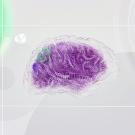
Modeling computers after the human brain — coding in electrical impulses instead of ones and zeroes — promises advanced problem-solving skills and low energy consumption.
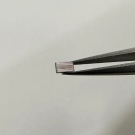
The new, UC Davis-developed sensor can detect vibrations a thousand times smaller and movement a hundred times smaller than a strand of human hair. It's also just a stepping stone to an even smaller, more powerful sensor.
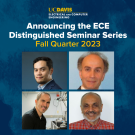
The Department of Electrical and Computer Engineering is proud to present the Fall Quarter Distinguished Seminar Series. ECE will host four distinguished and accomplished individuals, scheduled for Fridays.
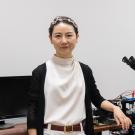
Professor of Electrical and Computer Engineering Q. Jane Gu has received funding from the National Science Foundation, or NSF, for her sub-terahertz/terahertz dielectric sensors research.
According to researchers, alumni and students in the University of California, Davis, College of Engineering, it's a "sizzling" and an "exhilarating time" to be involved with quantum information sciences.
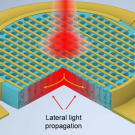
Photonics, which operate based on particles of light (photons), are increasingly important for applications such as optical communications, connections between electronic and optical networks, and imaging. But silicon, the go-to semiconductor for making electronic chips, is not a great material for photonic applications because it shows poor absorption of near-infrared light compared to other semiconductors such as gallium arsenide.
Electrical and Computer Engineering Professors J. Sebastian Gomez-Diaz and Q. Jane Gu are co-principal investigators on one of six projects to receive funding from the National Science Foundation and the National Science and Technology Council of Taiwan.
Interconnectivity is not only the topic of Professor Q. Jane Gu’s research. It also describes the approach she takes to her collaborative work both at the University of California, Davis and on a national level as a female leader in STEM.
You’re on a long road trip. You’re enjoying your favorite tunes as your self-driving car moves you down the road. Then suddenly, a driver going in the other direction swerves into oncoming traffic right at you. Will the artificial intelligence, or AI, in the car have enough time to react and save you from a head-on crash?